Jewelry Industry Employee Training
Project Duration/ Three months
Client/ Legacy Jewelers
Target Audience/ New employees
Jewelry is a high-value industry with complex knowledge requirements.
To help new employees quickly grasp industry terminology and company-specific workflows, I developed a comprehensive internal training courseware. The course consists of five chapters covering key topics such as order writing, stone measurement, essential design information, and estimating rough ballpark pricing for clients.
Conclusion
This project reinforced the importance of structured onboarding in knowledge-intensive industries. I deepened my understanding of instructional design, user engagement, and how to translate complex industry knowledge into an effective learning experience. The result was a streamlined, efficient training tool that helps new employees become job-ready faster.
My Role
-
Sole creator of the courseware
-
Conducted company-wide research to understand internal workflows
-
Designed and developed interactive training content
-
Integrated company-provided cheat sheets for quick reference
-
Created knowledge assessments for each chapter
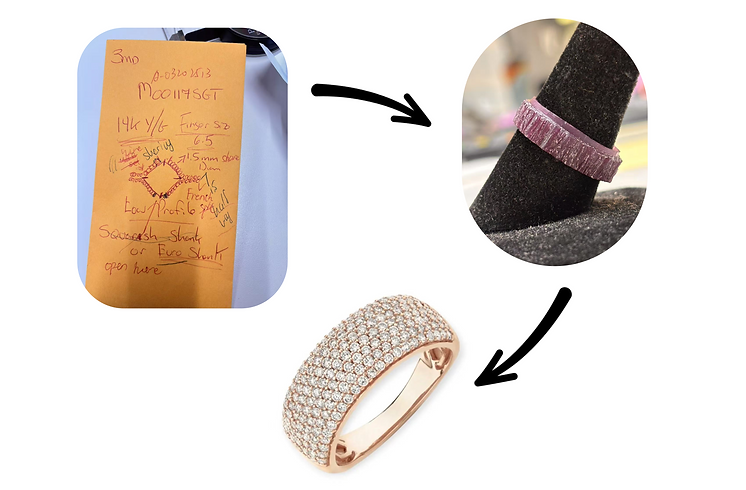
I was trained for two months to understand those knowledge in Jewelry industry.
🔧 How to write an order 🔧
An interactive learning experience designed to help new employees quickly adapt to the jewelry industry’s workflow and terminology.
👇 Click to explore the demo course!
Showing the first lesson: order sheet.
📊 Analysis
-
Goal: Enable new employees to efficiently learn industry terminology and company-specific workflows to reduce onboarding time and improve accuracy in their tasks.
-
Learner Profile:
-
New hires with varying levels of experience in the jewelry industry
-
Some may have no prior knowledge of industry-specific processes
-
Need an engaging, structured approach to learning complex concepts
-
-
Key Challenges:
-
High knowledge density with industry-specific terms
-
Jewelry is a precision-based field; mistakes can be costly
-
Employees need to be job-ready as quickly as possible
-
-
Solution:
-
Structured the content into five focused chapters
-
Paired explanations with company-provided cheat sheets
-
Included interactive assessments to reinforce learning
-
.png)
Step by step, let the students understand the structure of jewelry design.
🎨 Design
-
Learning Objectives:
-
Understand the fundamental terminology and processes in the jewelry industry
-
Gain confidence in handling essential tasks such as order writing and stone measurement
-
Learn how to provide quick pricing estimates for clients
-
-
Content Strategy:
-
Clear, step-by-step explanations of each concept
-
Visual aids and real-life examples to enhance understanding
-
Interactive quizzes to reinforce key takeaways
-
-
Tone & Engagement:
-
Professional yet approachable to make learning enjoyable
-
Encouraging tone to reduce anxiety around learning complex concepts
-

The outcome of this CAD need more than 5 steps to create it.
🛠 Development
-
Tools Used: Articulate Storyline, Powerpoint with iSpring.
-
Content Creation:
-
Wrote all instructional materials based on company processes
-
Created interactive elements for engagement
-
Developed structured knowledge tests for each chapter
-
-
Team Collaboration:
-
Cross-border, multilingual colleboration. Gathered insights from Chinese designers and department heads.
-
Reviewed content with senior staff to ensure accuracy
-

International, multilingual collaboration was a key part of the experience.
🚀 Implementation
-
Delivery Platform: Web and mobile device.
-
Rollout Strategy:
-
Piloted with a small group of new hires for feedback
-
Iterated based on responses before company-wide rollout
-

Showing part of the courseware with mobile device.
📊 Evaluation
-
Formative Evaluation:
-
Conducted pre-launch feedback sessions with employees
-
Adjusted content and assessments based on initial user insights
-
-
Summative Evaluation:
-
Measured employee performance improvements through quiz results and on-the-job accuracy
-
Gathered feedback from managers on employee readiness post-training
-

Greatly accelerated new employee adaptation and streamlined processes.